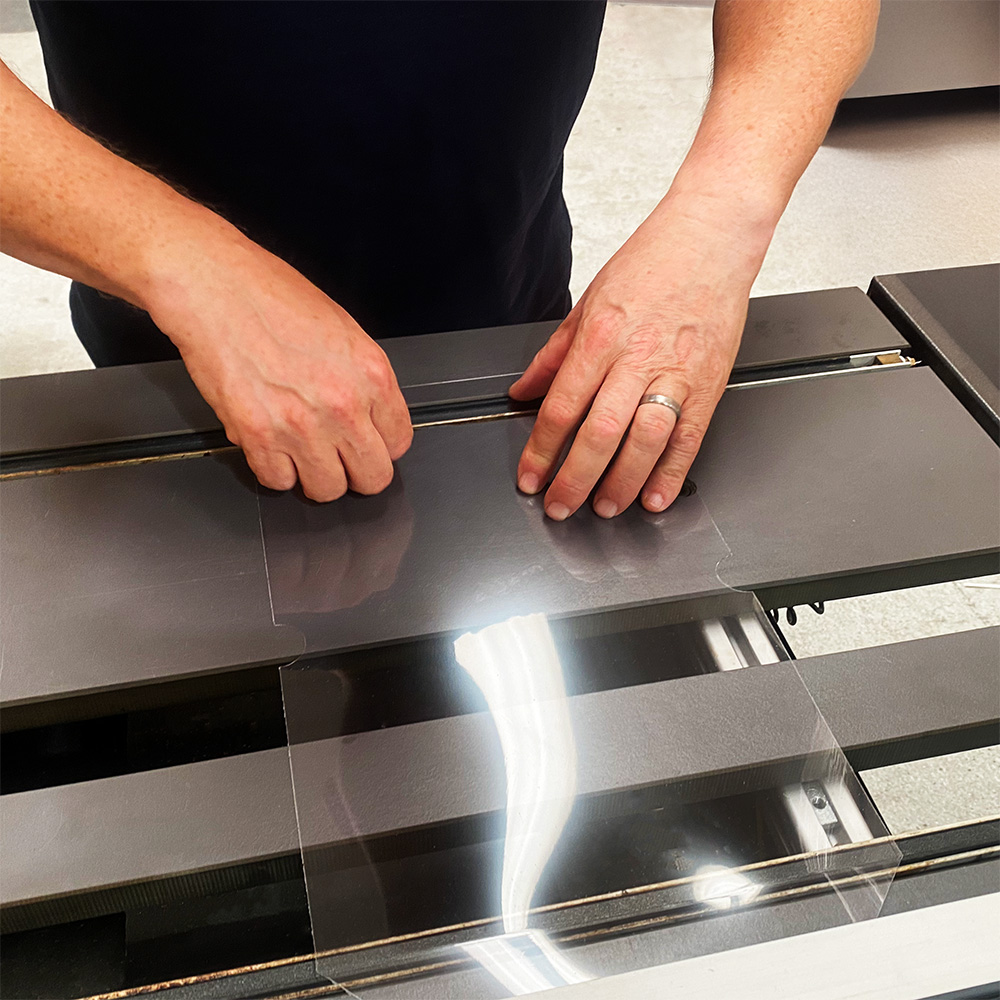
For the past few months, our line bending operation has barely had a chance to slow down.
Within our hand fulfilment and contract packing unit, the team has produced a steady stream of components for point-of-sale displays, supermarket shelving, and other retail applications. Some are simple pieces, while others require precise bends and careful handling to achieve the required shape.
This work can be easy to overlook once the finished display sits neatly on a supermarket shelf or countertop. Yet behind many seemingly simple components lies a specialised process that requires the right equipment, materials, and people who know how to produce consistent results.
The continued demand for this work has led us to consider the challenges businesses face with specialist production needs. If you need line bending for a project, campaign, or customer, does it make sense to invest in equipment and resources yourself, or is outsourcing more practical?
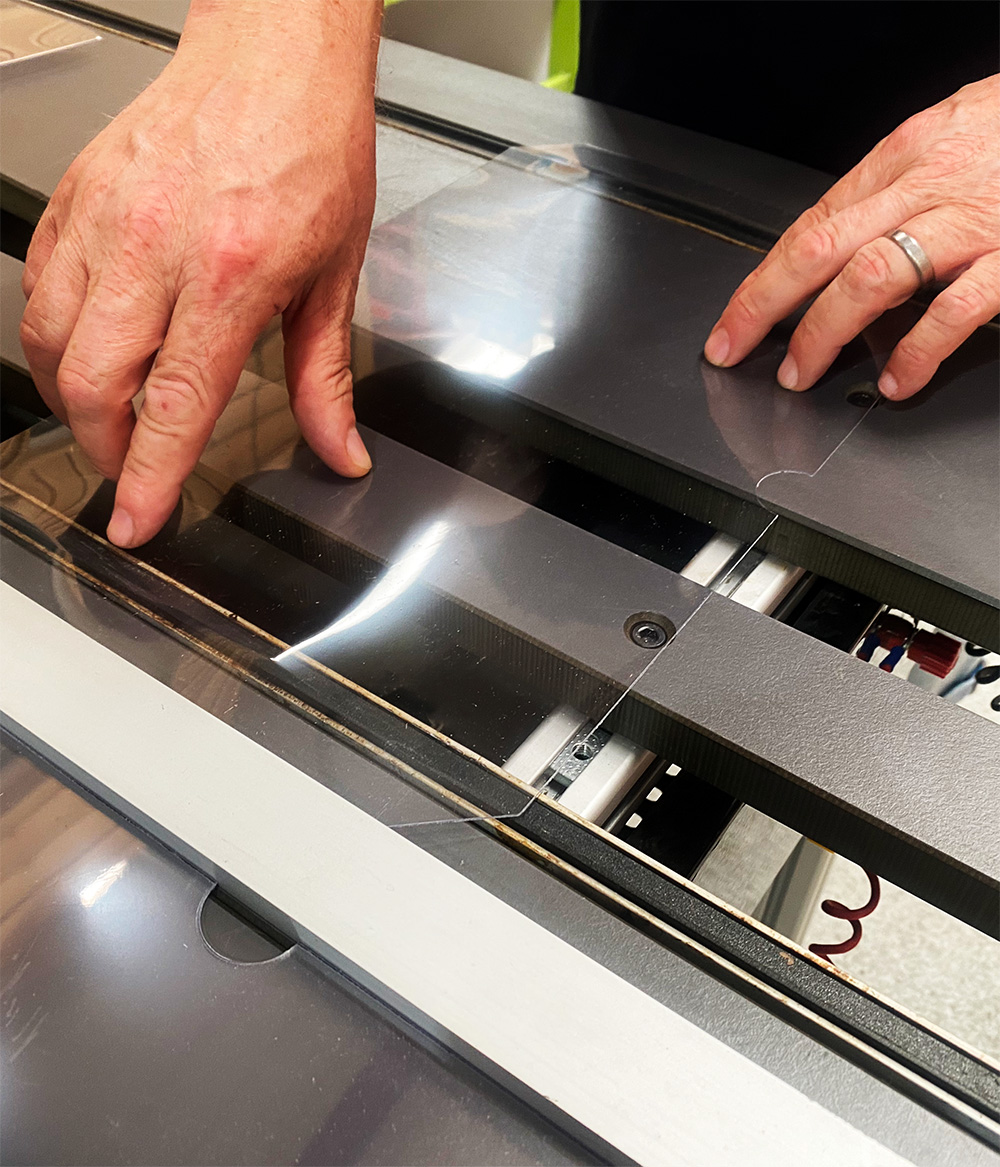
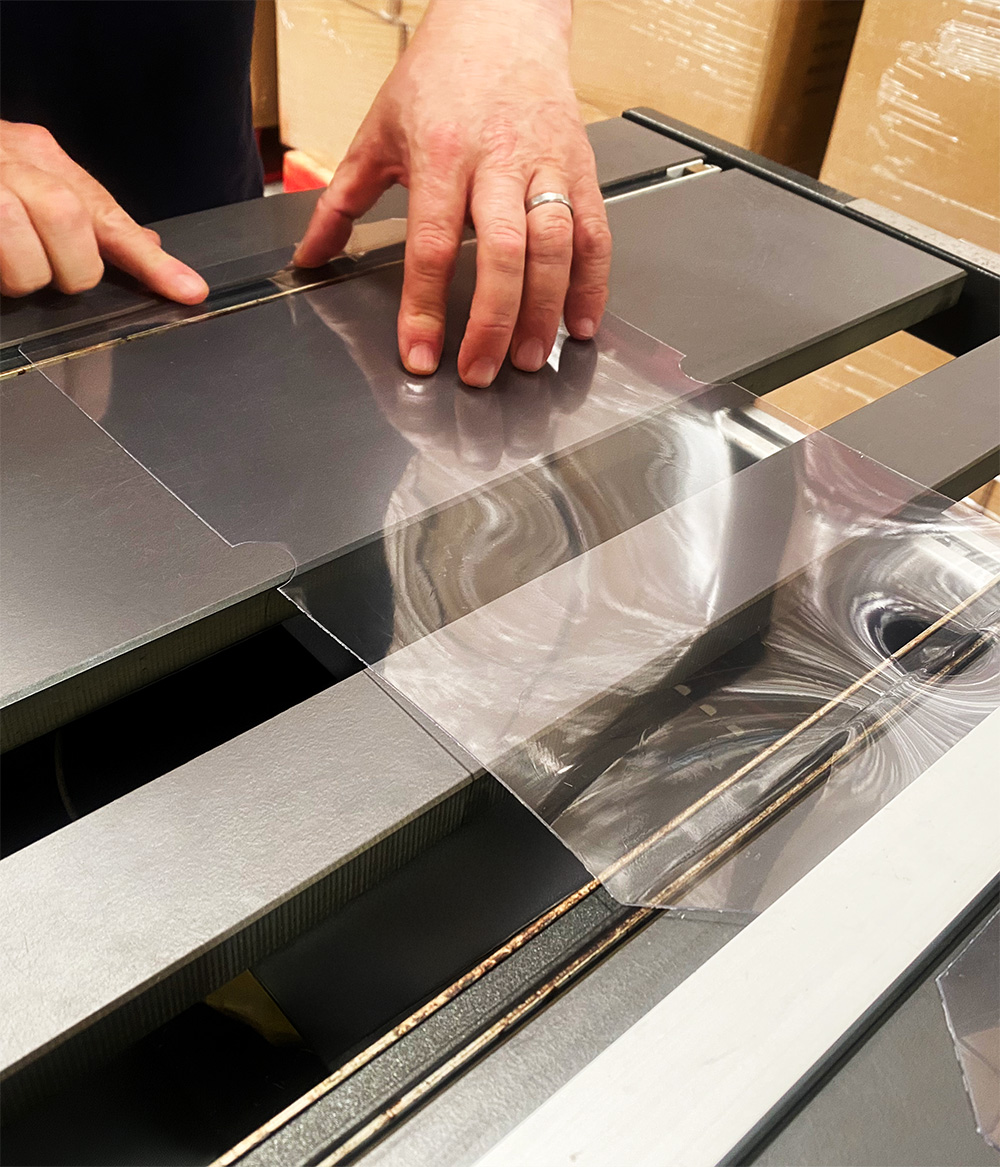
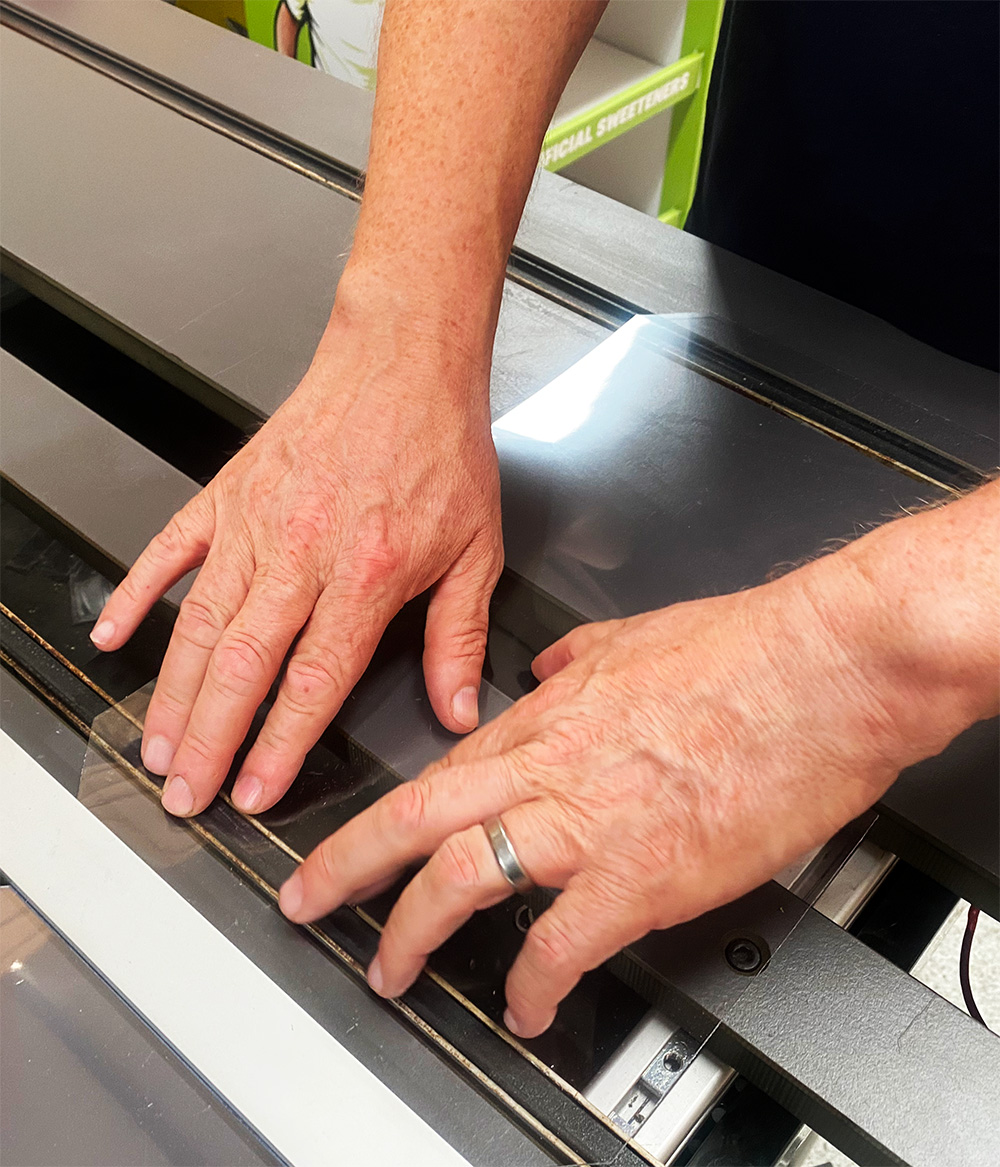
Line bending is a process used to form a sheet of plastic along a specific line. Heat is applied to a narrow section of the material until it becomes pliable enough to bend, allowing the sheet to be formed into the required angle or shape. Once cooled, the material retains its new form.
The process is sometimes referred to as heat bending because heat is what allows the plastic to be formed. Line bending is the more specific term for the process, as the heat is concentrated along a defined line rather than being applied to the entire sheet.
It is a useful technique for creating products from a single piece of plastic, particularly where a clean, precise fold or angle is required. Rather than cutting several pieces and joining them together, a flat sheet can be formed into the required shape through a controlled bend.
That makes line bending particularly useful for point-of-sale and retail applications. The process is commonly used to create items such as leaflet holders, display stands and other POS components, where accuracy and a clean finish are important.
The answer is partly found in the applications themselves.
Retail environments rely on a huge number of relatively small components to organise products, present information and support promotional activity. They may not attract much attention from shoppers, but they play an important role in how a store looks and functions.
Supermarket shelving is a good example. A retail display may require angled shelf dividers to keep products organised, ticket rails to hold pricing information, front risers to create a defined edge, or gravity-feed dispensers that help products move towards the front of a shelf as stock is removed.
Then there are point-of-sale displays.
Clear leaflet holders, menu holders, wobblers and countertop display cases can all be produced using formed plastic components. They need to look neat, fit their designed environment, and withstand the handling that comes with use in a busy retail setting.
For the businesses commissioning this work, these components are often just one part of a much larger project. A campaign may involve hundreds or thousands of individual pieces that need to be produced, checked, assembled and prepared for delivery.
That is where the line bending process becomes part of a wider fulfilment requirement rather than a standalone manufacturing task.
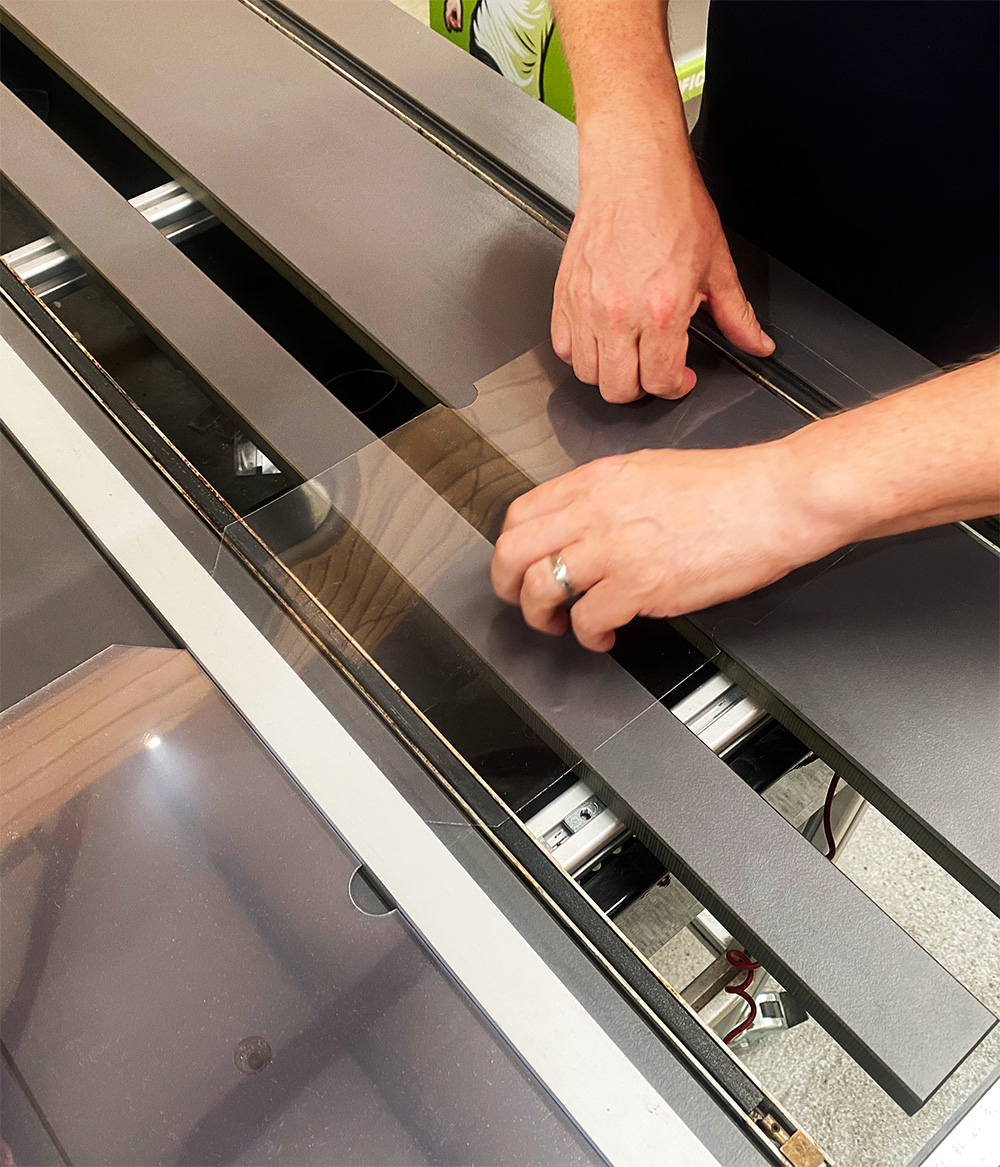
At first glance, bending a sheet of plastic along a straight line might not sound particularly complicated.
The reality is somewhat different.
The material must be heated enough to bend without damaging the finished component. The bend position and angle must be consistent. Different materials and thicknesses behave differently when heated, so the process requires an understanding of how each material responds at the required temperature.
Once the plastic has been formed, it also needs to cool while retaining the intended shape.
That is particularly important when a large quantity of identical components is required. Producing one successful bend is one thing. Producing hundreds or thousands that all meet the same specification is another.
This is one of the reasons line bending is a specialist process. The equipment is important, but so is the experience of the people using it and the quality control surrounding the production process. Other UK line-bending specialists similarly point out the importance of controlled heating, precise positioning, and specialised equipment to produce consistent bends.

One reason our operation has such a varied workload is that line bending can be used to create a surprisingly wide range of retail components.
In supermarket environments, it can be used for shelf dividers, ticket rails, front risers, and gravity-feed dispensers. Each performs a slightly different job, but all need to work alongside existing shelving and products without getting in the way of the customer.
Point-of-sale applications are equally varied.
Transparent leaflet holders can be used on counters or within displays to keep printed information visible and accessible. Menu holders can present information neatly, while countertop display cases can provide a more structured way of presenting products or promotional materials.
There are also applications where the finished component is only one part of a larger display or campaign. In these cases, the line bending itself is important, but so is everything that happens around it.
The component needs to be produced, checked, handled, and ultimately delivered in the right format and within the required timeframe.
For some businesses, bringing production in-house will make perfect sense.
If line bending is a regular part of your operation and you have a consistent volume of work, investing in the necessary equipment and developing the process internally may be worthwhile.
The situation is different when the requirement is occasional.
You may need a large quantity of components for one retail campaign but have little use for the equipment afterwards. You must consider where to house the equipment, who will operate it, how staff will be trained, and how to manage the process if demand grows. Cost is also a factor. Investing in specialist machinery and training can be expensive, especially if the equipment is rarely used. For example, purchasing a line-bending machine and setting up an in-house process could require a considerable upfront investment and ongoing operating costs, which may take several years to recoup if your production needs are limited to just a few projects. By comparison, outsourcing allows you to pay only for what you need, when you need it, leading to a much faster return on investment for project-based or seasonal work. In many cases, companies find that the total cost of outsourcing a single large campaign is far lower than building and maintaining in-house capacity. Outsourcing helps avoid these upfront costs and ongoing overheads, making it more cost-effective for occasional or project-based needs.
There is also the question of capacity.
A business may already have a busy manufacturing schedule and lack space or staff to take on another specialist process. Adding line bending can create extra pressure when the business prefers to focus on work it already does well.
Outsourcing provides another route.
Rather than creating an entirely new capability for a particular project, you can work with a supplier that already has the equipment, experience, and capacity.
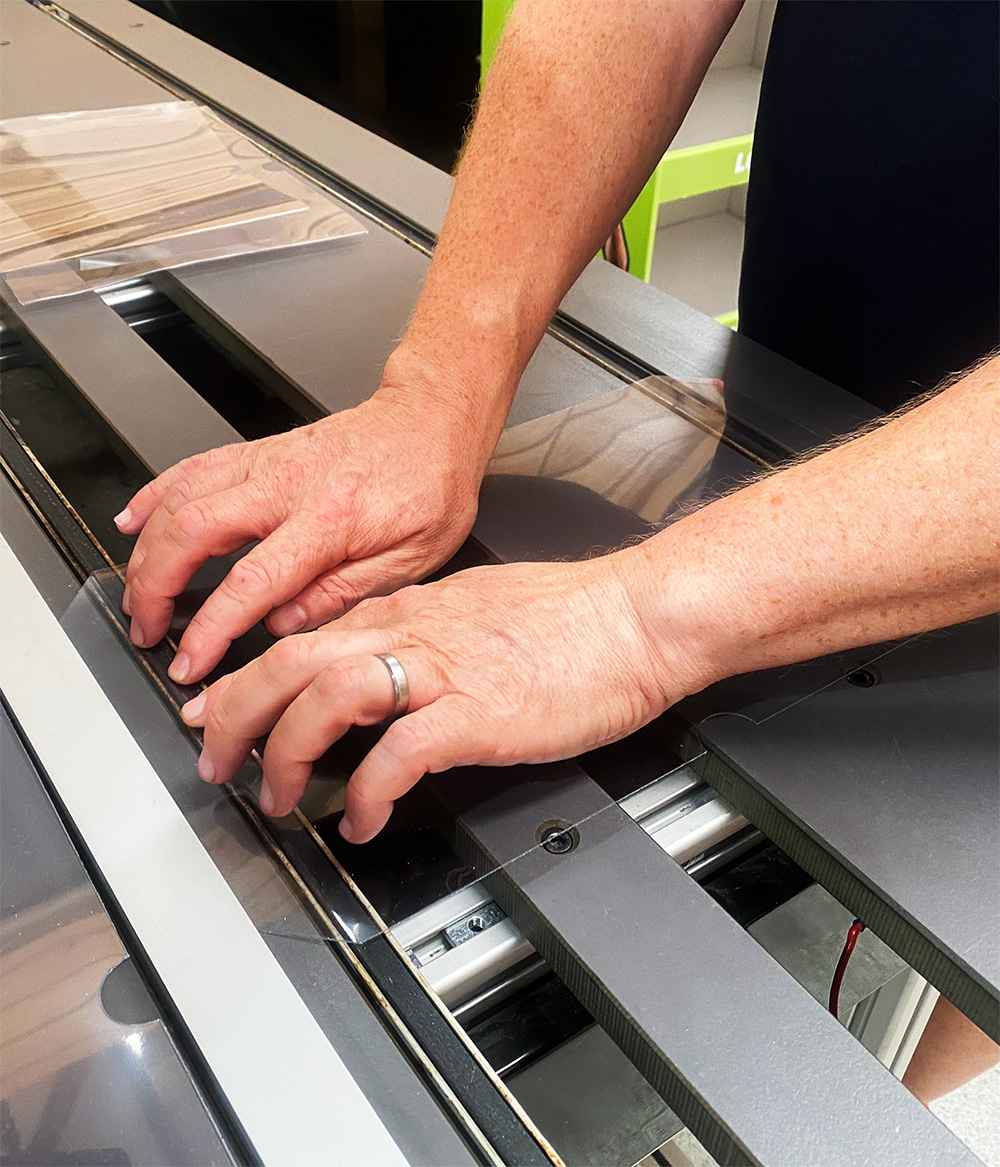
There can sometimes be a perception that outsourcing a production process means losing control over the finished product.
That should not be the case.
A good outsourcing arrangement should begin with a clear understanding of the specification, materials, dimensions, quantities and expected finish. Samples can then be produced and checked before the wider production run begins. Throughout production, quality control steps are built into the process: each batch is carefully inspected to verify consistency in dimensions, angles, and finish, and any deviations from the specification are flagged and reviewed. If something is not quite right, we work with the customer to put it right. If a batch does not meet the required quality standards, we stop production and investigate what went wrong. This could be linked to the materials, machinery or the production process itself. Once the cause has been identified, we work with the customer to decide the most appropriate next step. If there is a problem with a batch, we look at what has caused it and decide what needs to happen next. We may need to change part of the production process, rerun the batch, or refer back to the original sample if something needs clarification. Dealing with the issue at this point means it can be addressed before production continues and helps prevent the same problem from occurring again.
This is particularly important for line bending because small differences in the finished angle or positioning can become much more noticeable when many components are used together.
At Flow, finalised, quality-checked samples are provided for review and approval before batch production begins. This allows the customer to confirm that the finished component meets the agreed requirements before the larger production run gets underway.
For a business outsourcing the work, that process provides reassurance without requiring it to purchase equipment or establish an internal line bending operation.
One of the biggest advantages of outsourcing specialist work is not necessarily the machinery itself.
It is the experience gained from working with a team that regularly carries out the process.
When a specialist process forms part of someone's everyday work, they develop an understanding of the practical details that are difficult to capture in a set of instructions. They know how to handle the material, where consistency needs to be checked and what can affect the finished result.
That experience becomes highly valuable when production volumes increase.
A business might be able to manage a small number of bends internally without too much difficulty. Producing thousands of consistent components to a deadline is a different proposition.
Outsourcing means the project can be handled by a team already set up for that type of production, rather than requiring your own staff to develop the capability while simultaneously managing their existing responsibilities.
The word "responsible" can mean different things in business.
It can relate to financial responsibility, but it can also mean using your resources carefully and avoiding unnecessary investment.
If line bending is not part of your main operations, buying specialised equipment to complete a single project may not be the most sensible use of your capital. You may also need additional workspace, staff training and time to establish a reliable production process.
There is a wider operational consideration too.
Every business has a finite amount of space, equipment, staff time and management attention. Deciding which activities should remain in-house and which can be handled by specialist partners is part of managing those resources properly.
Outsourcing line bending can therefore be a sensible choice when it allows a business to access specialist production without taking on an ongoing capability that it does not need.
It is not about outsourcing everything.
It is about deciding where your own resources are best used.
This is where the connection between line bending and our wider fulfilment operation is especially useful.
A customer may initially approach us because they need a particular plastic component produced. However, that component may then need to be counted, assembled, packed, labelled, collated or prepared for distribution.
If different suppliers are handling those activities, the project can quickly become more complicated to manage.
Having line bending alongside hand fulfilment and contract packing means more of those practical requirements can be handled within the same operation.
The line bending produces the component, but the wider fulfilment process helps turn that component into something ready to go where it needs to go.
For a retail campaign, that might mean preparing specific quantities for different stores or locations. It could involve combining the bent components with printed materials or other campaign items, then packing everything according to the customer's requirements.
The exact process will depend on the project, but the principle is straightforward. The more of the practical work that can be coordinated within a single operation, the less the customer has to manage across separate suppliers.
Point-of-sale projects frequently involve tight deadlines.
A display may be linked to a product launch, a promotional campaign, a seasonal activity, or a specific retail rollout. If one component is delayed, the impact can go beyond that individual item.
That is why production capacity matters.
Having access to an established line-bending operation means businesses do not necessarily have to wait until they have the capacity or equipment to produce the components themselves.
Instead, they can bring in a specialist partner when the requirement arises.
For us, this is part of why our line-bending operation has remained so busy. The work does not exist in isolation. It forms part of wider retail, print, fulfilment, and point-of-sale projects where several elements need to come together.
There is no universal answer to whether line bending should be outsourced.
The right decision depends on how often you need the process, the volumes involved, the complexity of the components and what resources you already have available.
If you have a regular requirement and the equipment would be in constant use, bringing the process in-house could be worth considering.
If the requirement is occasional, seasonal or linked to a particular customer project, outsourcing may be more practical. It gives you access to the capability when you need it without creating another permanent production requirement within your business.
It is also worth looking beyond the bending itself when choosing a supplier.
Ask what happens before production, how samples are approved, how quality is checked and whether the supplier can support the work after the bending has been completed. It can help to use a checklist of key criteria when assessing potential suppliers, such as:
You may want to ask how the supplier has handled similar projects, whether they can provide examples of recent work and how they maintain quality across larger production runs. It is also worth understanding how they deal with unexpected issues or delays, as well as whether they can provide realistic timescales and keep you updated throughout the project.
By considering these practical points, you can choose a supplier that not just meets your technical requirements but also fits your way of working.
If your components need to be packed, assembled, or prepared for distribution, combining those requirements with line bending could make the overall project considerably easier to manage.
Our line-bending operation has been particularly busy for months, and that has given us a useful reminder of just how much specialist work goes into some of the retail displays we see every day.
A clear leaflet holder, shelf divider or countertop display may look simple once it is finished. Producing large quantities of consistent components, however, requires the right process, equipment and people.
For businesses that regularly use line bending, investing in those capabilities may be entirely justified.
For everyone else, outsourcing can provide another option.
You can access specialist line bending when you need it, without committing your business to additional equipment, space, training, or production capacity. And when the work can then move directly into hand fulfilment and contract packing, the benefits can go beyond the bending process itself.
That is ultimately what good outsourcing should do. It should not simply move a task from one business to another. It should make a specific part of your operation easier to manage while allowing your team to focus on the areas where their time and resources are best spent.
Whether you need components for point-of-sale displays, supermarket shelving, or another retail application, our team can discuss your requirements and look at what is involved. During our initial consultation, we proceed by understanding your project goals, the type of components you need, and any specifications or technical requirements. We will also discuss your desired timeline and any key dates to determine the best approach.
Typically, you can expect the initial meeting to cover:
This first conversation is an opportunity for us to identify the right solution for your business, set clear expectations for timelines and deliverables, and answer any questions you might have.
From the initial specification and sample through to batch production, quality checking and any associated hand fulfilment or contract packing, we can help you consider how the different stages of the project can work together.
Because sometimes the most practical way to manage a specialist requirement is not to build the capability yourself, but to work with a team that already has it.

Published by:
Published on:
August 14, 2026
Role:
Mick here…Co-Founder & Head of Fulfilment, Warehouse & 3PL. Bringing more than 20 years of industry experience, Mick under his mantra of "under-promise and overachieve," guides the production floor to aim for perfection, anticipating potential quality issues before they arise to deliver flawless results.
FAQ
We’ve got you covered. Below are answers to some of the most common queries from businesses like yours.
Send us a message
Get in touch
Keep our details for later...

Phone Number
0800 090 3001.webp)
Email Address
info@theflowgroup.co.uk.webp)
What3words
jump.coast.teach.webp)
Working hours
Monday - Friday.webp)
Our Office
Unit J, Dyehouse Ln, Brighouse HD6 1LLFollow our social media




Sectors
© Flow Group. All rights reserved

