Line bending is a precise, efficient method for shaping thermoplastic sheet into clean, accurate bends and angles. It is commonly used to produce retail displays, point-of-sale components, signage, covers, and other plastic parts where a consistent finish and accurate dimensions matter.
Flow works with retailers, POS manufacturers, printers, and plastic manufacturers to produce line-bent components that fulfil their specific requirements.
Whether you have a design, technical drawing, or just an idea for the finished component, we can help you choose the most suitable approach.Our team can review your requirements, talk through the material and design, and detect any issues that could affect production. This means you can make any necessary changes before work starts and be confident the finished component will do what you need it to.
If you have a project in mind, contact our team to discuss your requirements and learn how line bending could work for your application.
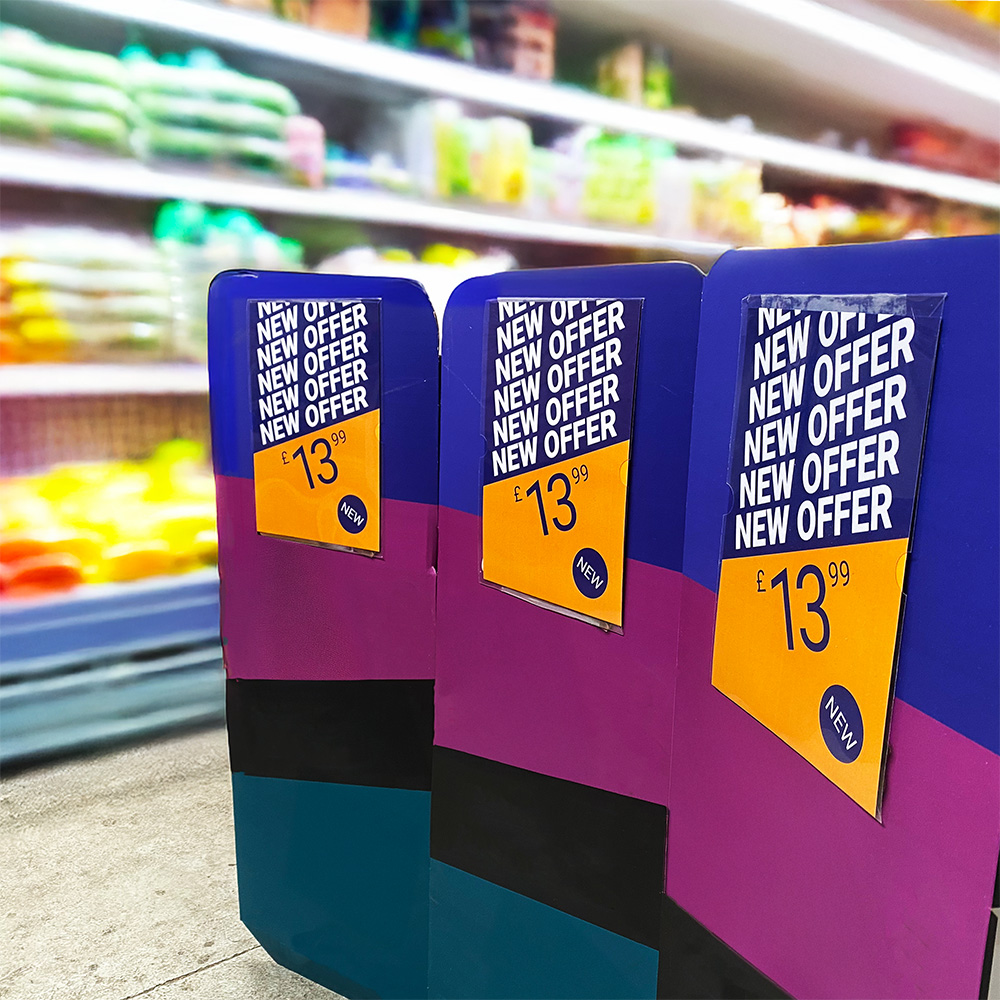
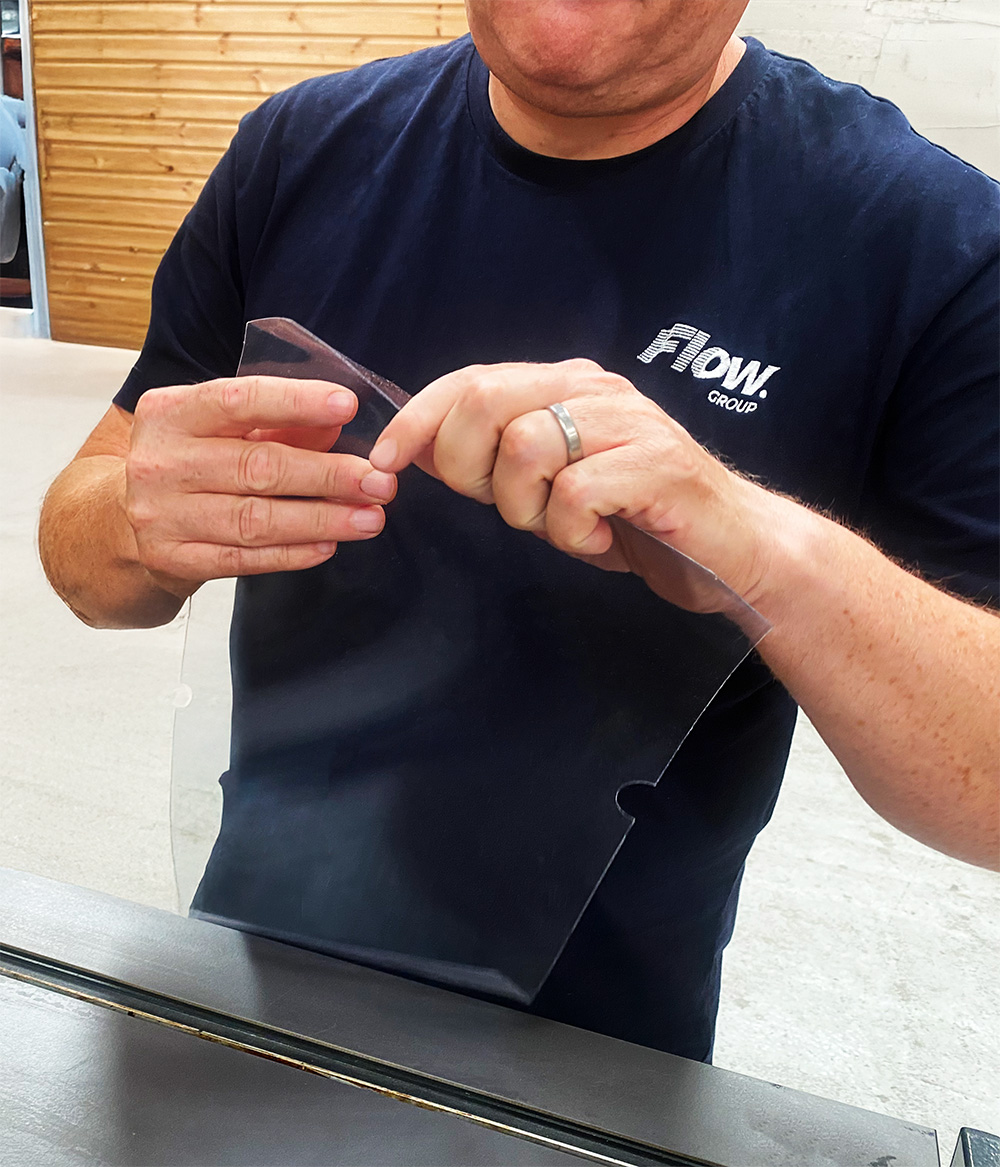
Before full production, we will produce a sample for you to review against your requirements. This lets you check the dimensions, bend positions, angles, material, and overall finish before we produce a larger quantity.The approval stage is especially useful for line-bent components, where the position and accuracy of each bend affect how the finished part fits or functions.Depending on your project, the sample can help you confirm:
- The component has been produced to the agreed specification
- The bend positions and angles are correct
- The material and finish are suitable for the application
- The component fits or works as intended
- Any required adjustments can be made before full production
Once the sample is approved, we can proceed with the agreed production run.
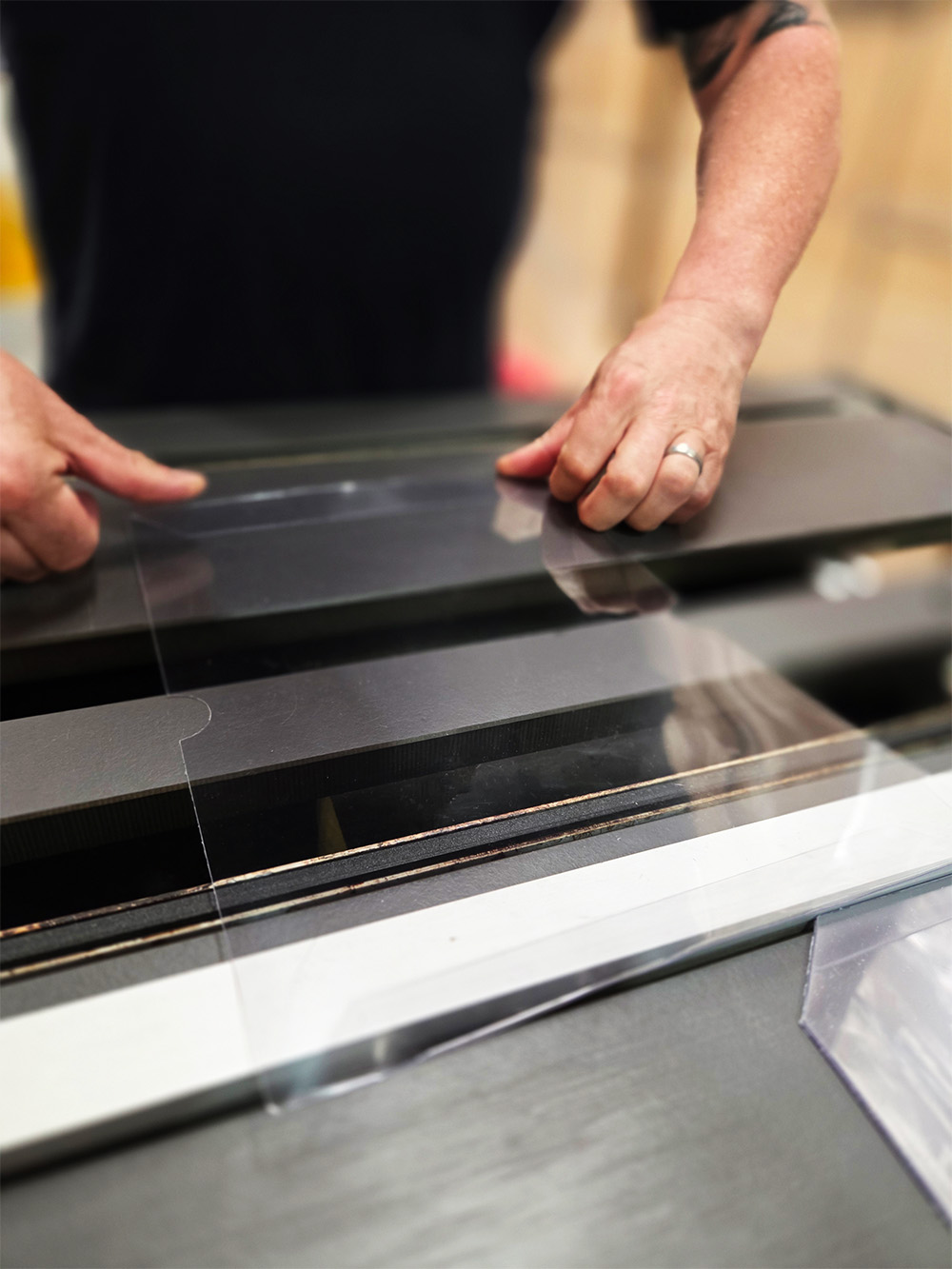
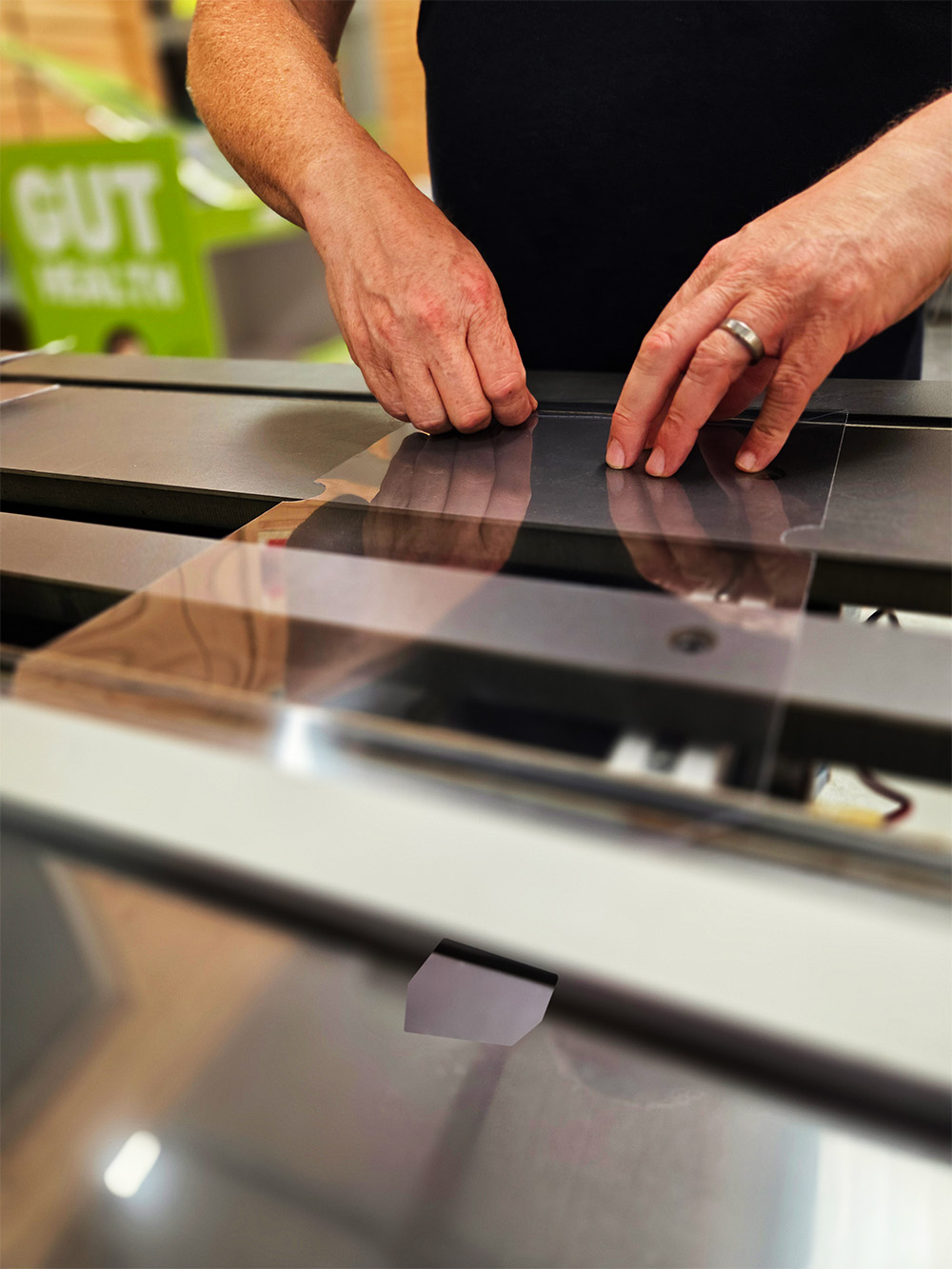
Line bending creates precise bends in thermoplastic sheet. A specific area is heated along a straight line until the material becomes flexible enough to bend.
It is then formed to the required angle and allowed to cool, leaving the material in its new shape.Operators must carefully control the heat, bend position, and material. This produces consistent bends without affecting surrounding areas of the sheet.
Line bending is particularly useful when a plastic component needs a clean, defined angle rather than a curved or moulded shape. It can be used for a wide range of applications, including:
- Retail displays and display components
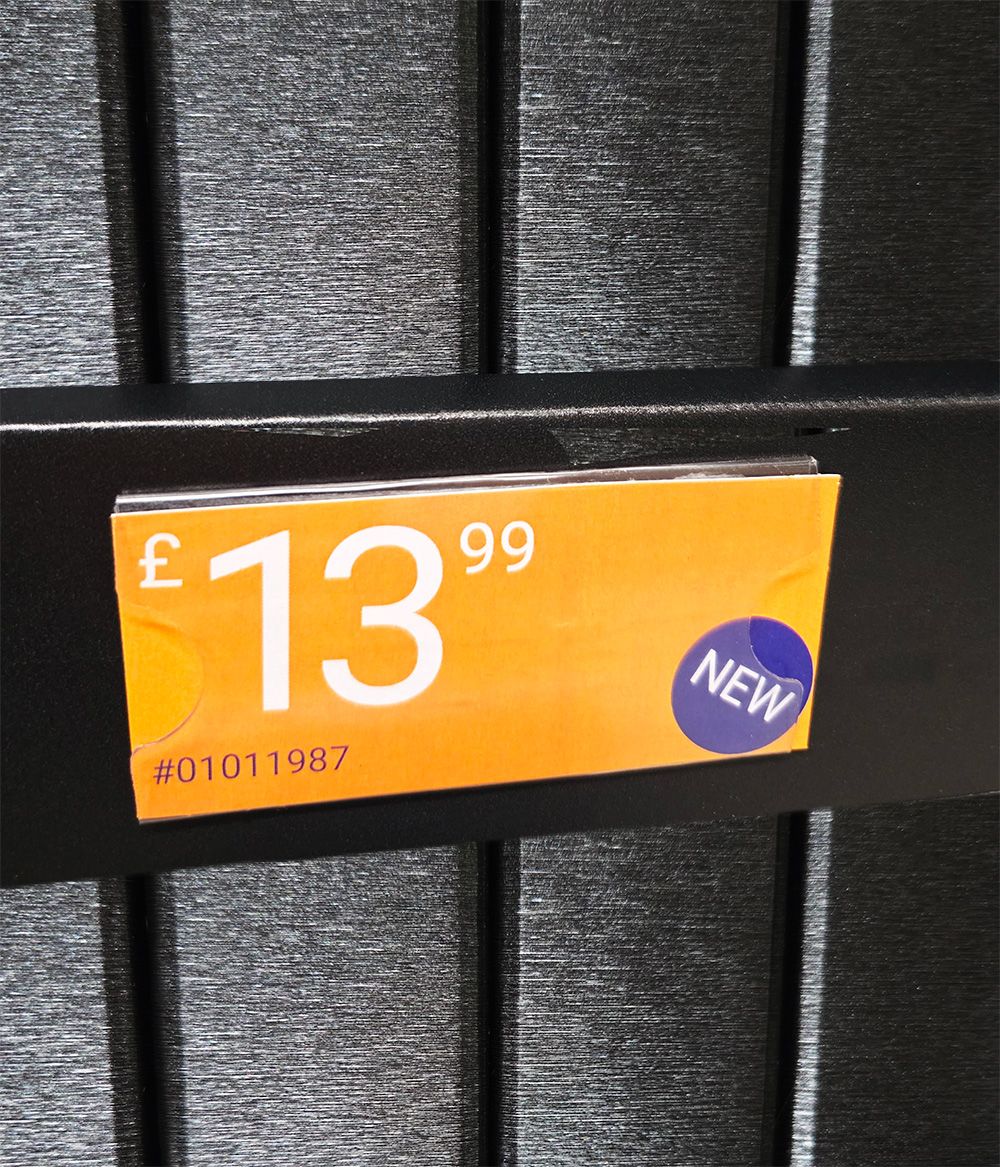
- Point of sale materials
- Signage and promotional displays
- Product holders and stands
- Covers, guards and enclosures
- Plastic components used in manufacturing and assembly
The right process depends on the material, sheet thickness, component size, and bends needed. Line bending is a good option for many parts with straight, defined bends, but it may not suit more complicated shapes, tight radii, or components that need to be formed in several directions.
For these projects, another fabrication method may be a better fit. If you have a design or sample, send it to our team, and we can review what is involved and whether line bending is the right option.
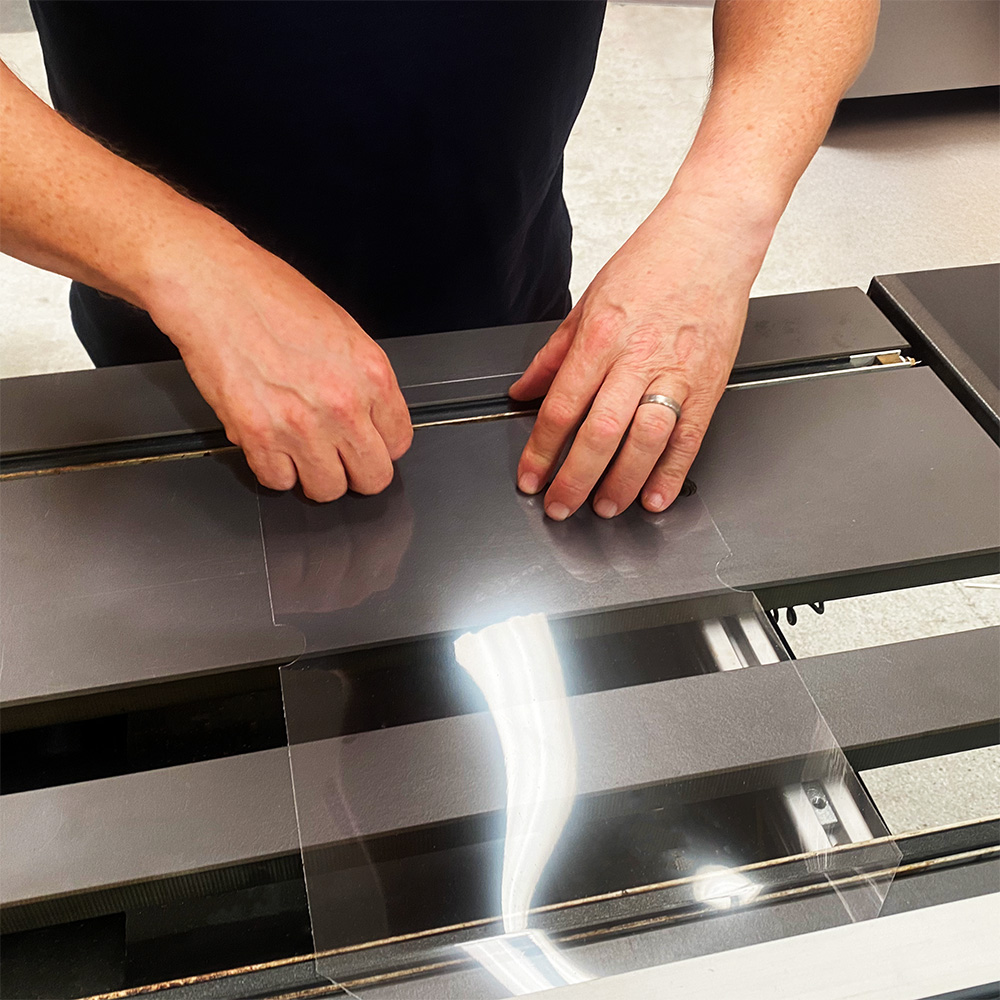
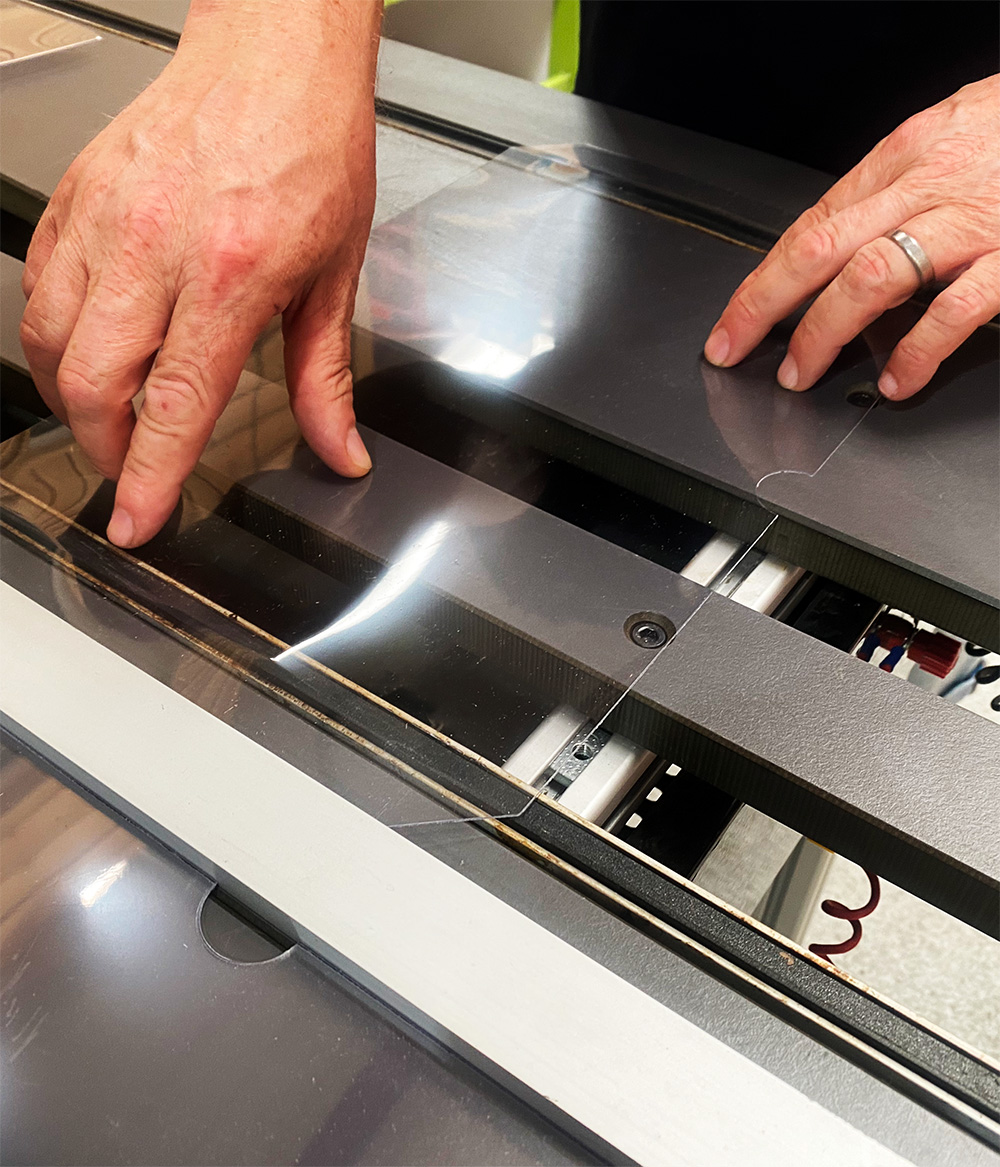
The material you use will affect the finished component, from its appearance and strength to how well it holds its shape. Different plastics react differently during line bending, so your choice should reflect what the component is for, as well as the required sheet thickness and finish.
Alongside polycarbonate and rigid PVC, acrylic (PMMA) is another option where a clear, glossy finish is important. PETG is also an option when you need a tough material that is relatively easy to form.The right choice depends on the job.
If you are unsure which material to use, our team can review the component you need to produce and discuss your options.
Polycarbonate is a tough, impact-resistant plastic that can be line bent to create strong, long-lasting components. It is available in both clear and opaque finishes, making it a good choice when you need strength and visibility.
Key benefits include:
- High impact resistance
- Available in transparent grades
- Good dimensional stability
- Suitable for rigorous environments
- Can be formed and fabricated into a range of shapes
Polycarbonate is often considered for strong retail displays, guards, covers, and point-of-sale components where the finished part needs to withstand regular handling.
PVC
Rigid PVC can be line-bent to create practical, sturdy components for various commercial applications. It is available in different grades and finishes, so you can select the material that meets the finished product's requirements.
Common applications include:
- Point-of-sale displays and stands
- Signage and display panels
- Covers and protective components
- Retail fixtures
- General plastic fabrication
PVC is a cost-effective option when durability, ease of fabrication, and a practical finish are important. Choosing the right materialNo single material suits every line-bending project. Consider sheet thickness, required bend angle, appearance, strength, and intended use before production.
If you already know which material you want to use, we can work to your specification. If you are unsure, our team can discuss the application with you and help identify a suitable material and approach.
Since 2008, Flow Group has provided specialist manufacturing, fulfilment, and print services to companies across several industries. Our experience means we understand the importance of consistent component production, especially when a project requires specific dimensions, materials, and finishing.
We carry out line bending at our 15,000 sq. ft. facility in West Yorkshire, supported by experienced teams and established quality management processes.
Our accreditations and memberships include:
- ISO 9001 for quality management
- ISO 14001 for environmental management
- ISO 27001 for information security
- DMA member through the Data & Marketing Association
- IPIA member through the Independent Print Industries Association
These standards and memberships support the quality processes we follow across the business. For line bending projects, we work to the agreed specification and check that components stay consistent throughout production.
If you have a drawing, sample, or specification, our team can discuss your requirements and advise on the most suitable approach.
We can also help if you are at the design stage and need to understand whether line bending suits your component.
Our team can work with you to help optimise your design for manufacturability and cost, ensuring your components are efficient to produce and meet your technical and commercial goals.
Discuss your project and learn how we may support your line bending needs.
FAQ
We’ve got you covered. Below are answers to some of the most common queries from our clients - so you can see how we make line bending high-quality, efficient, and perfectly tailored to your needs.
Send us a message
Get in touch
Keep our details for later...

Phone Number
0800 090 3001.webp)
Email Address
info@theflowgroup.co.uk.webp)
What3words
jump.coast.teach.webp)
Working hours
Monday - Friday.webp)
Our Office
Unit J, Dyehouse Ln, Brighouse HD6 1LLFollow our social media




Sectors
© Flow Group. All rights reserved

