Direct mail marketing can help businesses reach specific audiences, generate enquiries and build relationships with customers. But a successful campaign involves more than designing a leaflet, printing a batch of letters and sending them out. The decisions made about the audience, data, format, production and delivery all affect the final result.
A well-planned direct mail campaign starts with a clear objective and brings every stage together. The message needs to reach the right people, the format needs to suit the purpose, the production process needs to be reliable, and the results need to tell you something useful about what to do next.
In this guide, I’ll explain how to plan a direct mail campaign, the practical considerations businesses should address before committing their budget, and what to look for when choosing a direct mail company.
I’m Buddy Cox, Head of Production at Flow Group. Having worked across the business for more than 13 years, I’ve gained hands-on experience of the processes and people involved in delivering print, direct mail and related services. That production perspective matters because a campaign that looks straightforward on screen can involve a series of important decisions before it is ready to reach its audience.
You can read more about my role and experience at Flow Group.
Direct mail marketing is the use of physical mail to communicate with an intended audience. Depending on the campaign, this might include letters, postcards, brochures, catalogues, leaflets or personalised printed materials.
Businesses use direct mail for a range of purposes, including introducing a service, promoting an offer, encouraging repeat purchases, generating enquiries and keeping in touch with existing customers.
The right approach depends on what you want to achieve. A simple postcard promoting a local service has different requirements from a personalised mailing sent to thousands of existing customers. The audience, message, quantity, format and delivery arrangements all need to work together.
Direct mail can also form part of a wider marketing plan. For example, a printed mailing might direct recipients to a dedicated landing page, provide a QR code for more information or support an existing customer campaign. The important thing is to give the recipient a clear next step and make it possible to assess whether the campaign achieved its objective.
Before deciding what to print, establish what you want the mailing to achieve.
Are you trying to generate new enquiries, encourage customers to return, promote a particular product or service, increase attendance at an event or raise awareness in a defined area?
Your objective will influence almost every decision that follows. If you want people to request a quotation, for example, your message and call to action should make that process straightforward. If you want to encourage an existing customer to make another purchase, the offer and timing may need to reflect their previous relationship with your business.
Set a measurable objective before the campaign begins. Rather than simply aiming to increase awareness, you might want to generate a defined number of enquiries, bring customers back to a service or achieve a particular cost per response.
It is also worth deciding how you will measure success before the mailing goes out. If tracking is added as an afterthought, you may find it difficult to understand which activity generated the response.
Before you get started, think about these points:
A clear objective gives the campaign direction and helps everyone involved make decisions against the same priorities.
A mailing is more likely to get a response when it reaches people with a genuine interest in what you offer. Consider who your customers are, what they need and which groups are most relevant to your campaign.
For a local business, geography may be an important part of the targeting decision. A home improvement company might focus on areas where it can deliver its services, while a retailer could target customers within a suitable catchment area.
For an addressed mailing, you may be able to use relevant customer information to segment an existing audience. Depending on what information you lawfully hold and how it can be used, this could include customer status, previous purchases or other relevant characteristics.
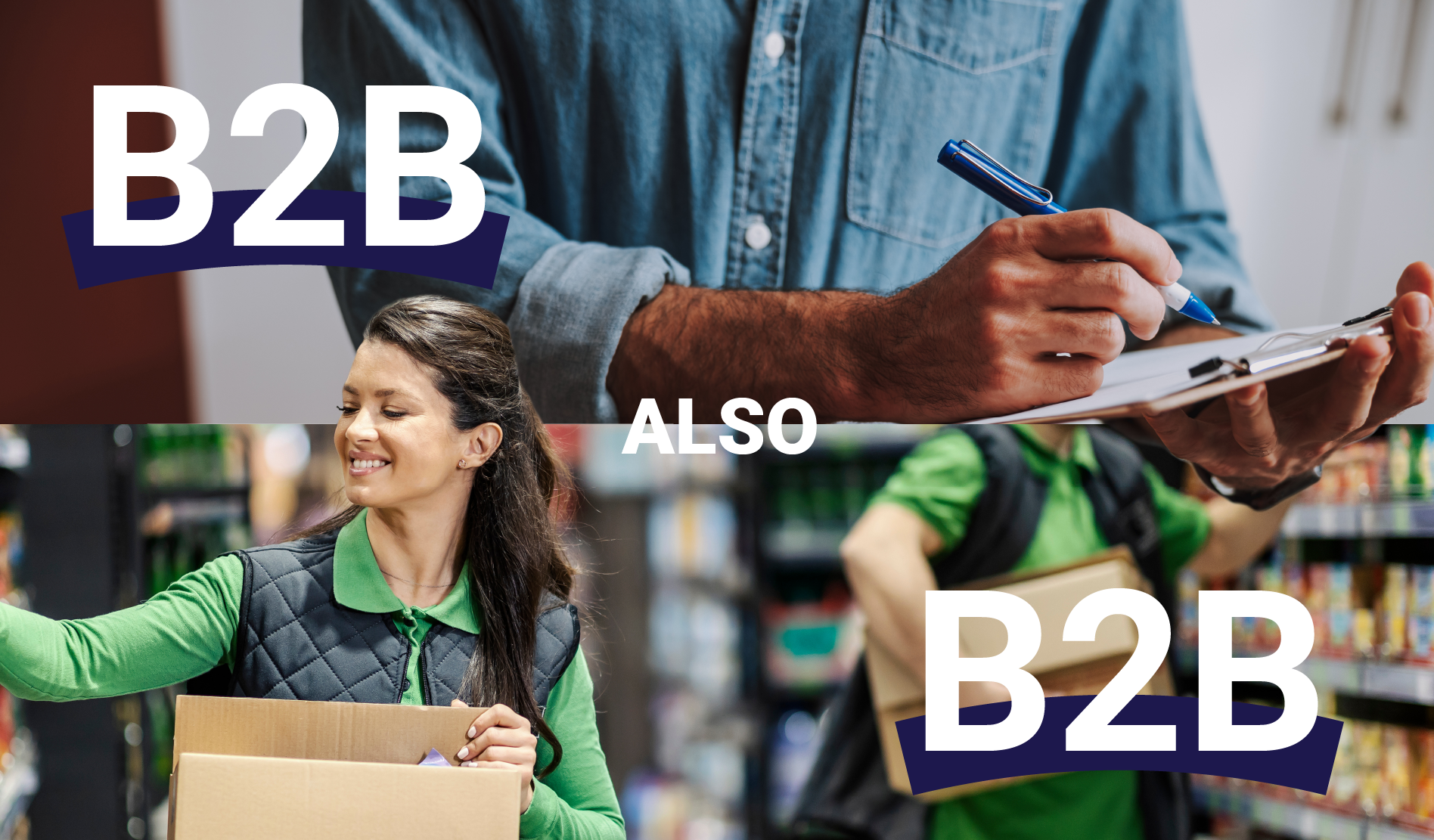
For business-to-business campaigns, you might focus on organisations within particular industries, locations or business categories. The selection criteria should relate to the service being promoted rather than simply producing the largest possible mailing list.
It is also important to understand the difference between addressed direct mail and unaddressed distribution. Addressed mail is sent to selected postal addresses, potentially with personalised information. Unaddressed distribution can help businesses reach households in selected areas without needing an individual name for every item.
Neither approach is automatically better. The right choice depends on the audience, campaign objective, available data and budget.
Flow Group provides direct mail services for businesses planning campaigns that involve print, mailing and associated production requirements.
Data quality is one of the practical considerations that deserves attention early in the process.
Outdated addresses, duplicate records, incomplete fields and incorrect information can create avoidable costs and operational problems. If a campaign uses personalisation, errors can also affect the recipient’s experience and undermine confidence in the business sending it.
Data preparation should happen before artwork and production are finalised. Depending on the campaign, checks may include:
Using personal data comes with legal obligations. Businesses need to understand why they are using the data, make sure they have a valid lawful basis, explain how it will be used and respect people’s rights. The requirements will depend on the type of activity and the circumstances.
The Information Commissioner’s Office explains these responsibilities in its official direct marketing guidance. Its guidance also explains the importance of planning data protection into a campaign from the beginning rather than trying to address it once production is under way.
For postal marketing, consent is not automatically required in every case. However, using personal information still requires an appropriate lawful basis, and organisations must respect objections to direct marketing. If a campaign also uses email, telephone or text messages, additional rules may apply.
Businesses using a third-party mailing provider should establish which party is responsible for each part of the process. Using a supplier does not remove the need to understand your own responsibilities.
Flow Group provides direct mail data management and cleansing to help businesses review and prepare data before a campaign progresses to production.
The printed piece needs to give people a reason to pay attention and make the next step clear.
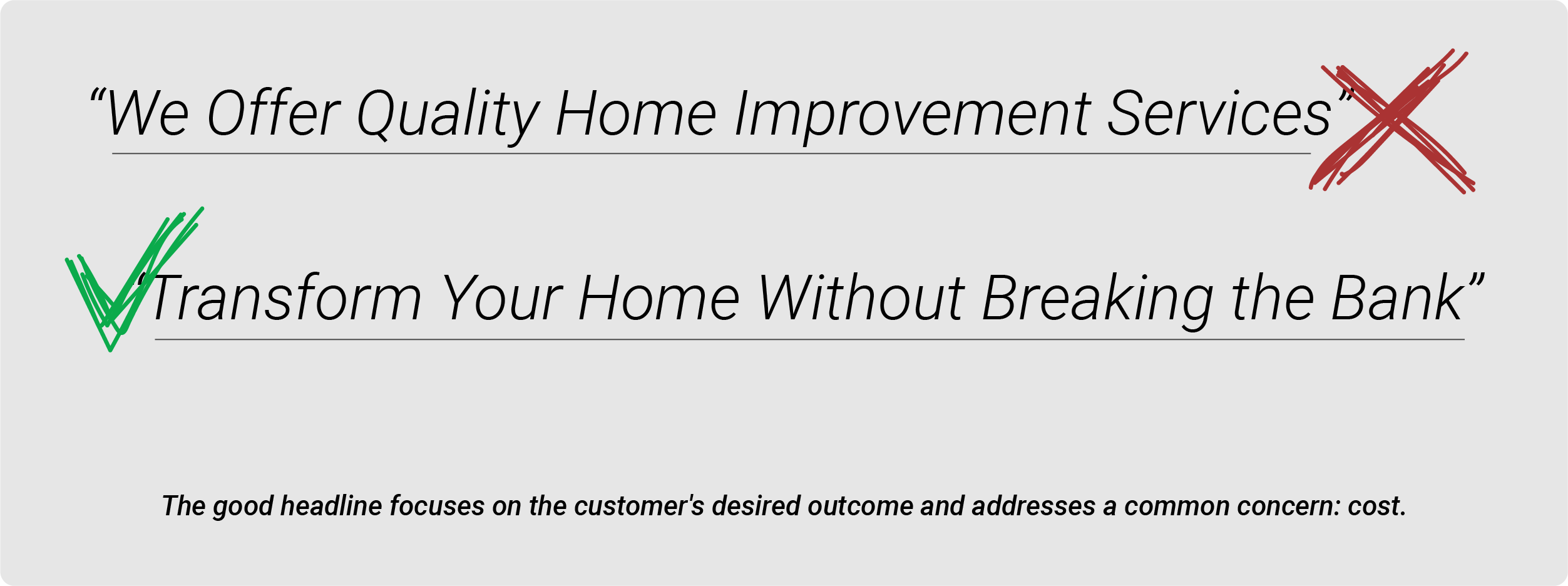
Start with the recipient rather than the product. What problem are you helping them solve? What do they need to understand? Why should they respond now?
A useful direct mail piece normally has a clear hierarchy: a headline that introduces the main message, supporting information that explains the value, and a call to action that tells the recipient what to do next.
Avoid trying to communicate everything at once. Too much copy, competing offers or several equally prominent calls to action can make the message harder to follow.
Consider the recipient’s likely response as well. A QR code may be useful if it leads to a mobile-friendly page that continues the message. A telephone number may be more appropriate for an audience that prefers to speak to someone. A response form may suit a campaign where the recipient needs to provide specific information.
The creative should also be considered alongside the physical format. A small postcard offers different opportunities from a multi-page brochure or a personalised letter with an enclosure.
Before approving the artwork, check spelling, contact details, offer conditions, dates, legal information and any variable content. If the mailing uses personalised information, make sure the design can accommodate the data correctly without awkward spacing or missing fields.
The format should support the message, the recipient’s needs and the campaign budget.
A postcard may be appropriate for a short, straightforward message. A letter can provide a more personal or detailed introduction. A brochure can help explain a service with several features, while a catalogue may be more suitable when recipients need to compare a wider range of products.
Other production considerations include paper stock, finished size, colour, folding, envelopes, inserts and finishing requirements. These choices affect how the item looks and feels, but they can also influence production methods, handling and postage costs.
For that reason, it is worth discussing the specification before artwork is finalised. Changing a format late in the process can mean revisiting the design, production plan or quotation.
When comparing quotations, make sure you are comparing like with like. Two suppliers may quote for different paper specifications, finishing options, quantities or levels of service. A lower headline price does not necessarily represent the lowest overall campaign cost.
Ask suppliers to identify what is included, what is excluded and which elements could change the final price. Confirm the production schedule and any approval deadlines before committing to a delivery date.
Some campaigns involve more than printing identical items. They may require recipient-specific text, multiple versions, enclosing, inserting, matching printed materials to records or preparing different batches for despatch.
These requirements should be agreed early because they can affect the artwork, data structure, production sequence and quality checks.
For a personalised mailing, it is sensible to confirm how variable information will appear and how the finished items will be checked. If a letter must be matched with a particular recipient or enclosure, the process needs to account for that requirement.
Quality control should be appropriate to the job. Depending on the campaign, this may include checking approved artwork, print quality, personalisation, folding, enclosing, quantities and the reconciliation of materials before despatch.
It is worth deciding in advance how any problems will be handled. Who needs to know if something goes wrong? How will the affected items be traced, and who needs to approve the work before production resumes? Agreeing these steps beforehand can help resolve issues quickly and keep the rest of the job moving.
Fulfilment can involve several connected activities, so the production plan should identify responsibilities, dependencies and deadlines. The more complex the mailing, the more important it is to make those details clear before work begins.
Flow Group can support businesses with direct mail campaign management, helping bring the planning and delivery stages together.
The campaign is not complete when the printed materials come off the press. They still need to be prepared and despatched in line with the agreed plan.
Work backwards from the intended arrival period. Allow time for data preparation, artwork approval, printing, finishing, fulfilment and despatch. If the campaign is tied to a promotion, event or seasonal deadline, agree the key dates with the supplier and understand which activities depend on your approval.
Be clear about what the delivery estimate actually means. Production completion, despatch and arrival with recipients are different milestones. The available delivery options and timescales will depend on the mailing method and the requirements of the campaign.
Before production starts, confirm the delivery method, any relevant postal requirements, the intended quantities and the information that will be available after despatch.
If the campaign involves several versions or destinations, make sure these are accounted for in the schedule. A clear plan reduces the risk of one part of the mailing holding up the rest.
Once the campaign has been delivered, assess it against the objective you set at the beginning.
Useful measures may include the number of enquiries, completed forms, calls, visits, orders or other actions attributable to the mailing. Depending on the campaign, you might use a dedicated landing page, QR code, offer code or telephone number to help identify responses.
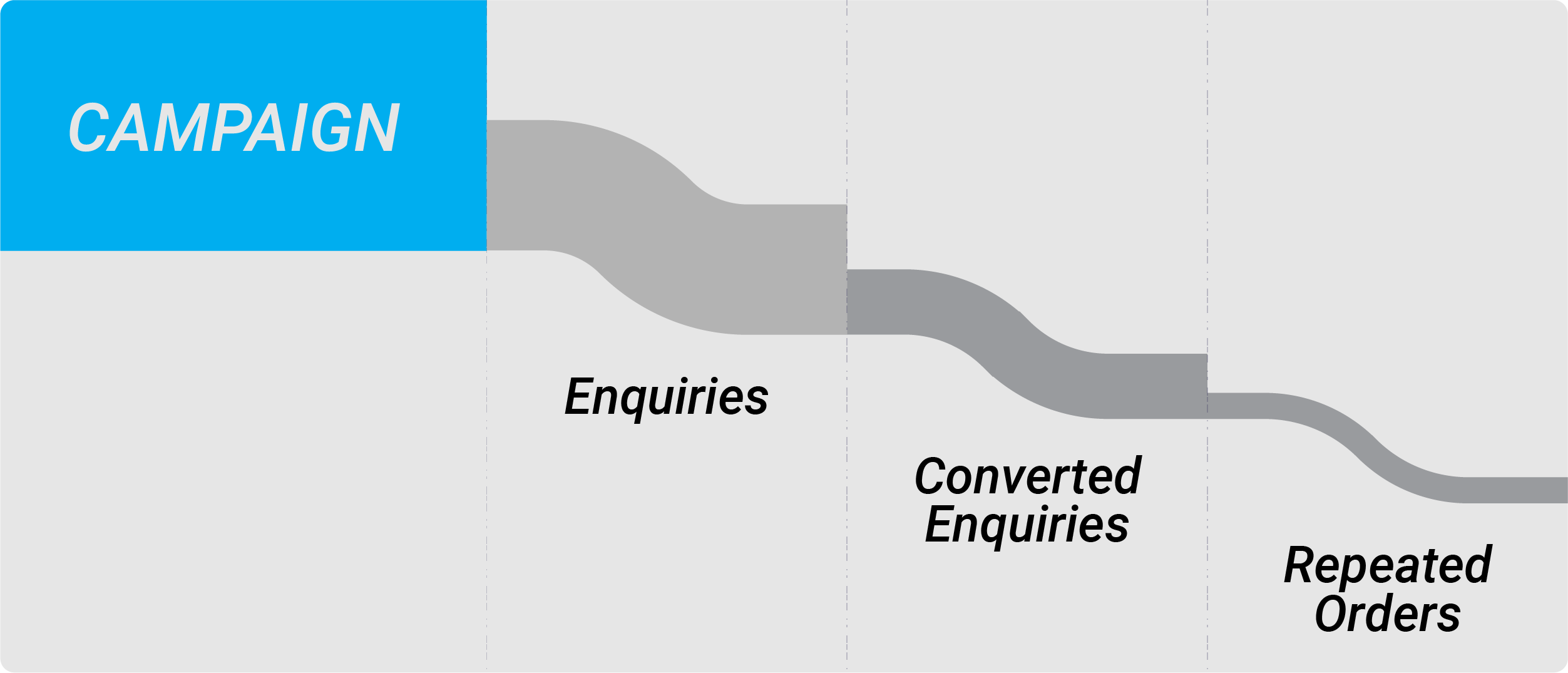
For example, if a campaign is designed to generate enquiries, record how many enquiries it produced, how many became customers and what those customers were worth to the business. This gives you a more useful picture than looking at response volume alone.
You can calculate response rate by dividing the number of recorded responses by the number of mail items sent, then multiplying by 100. Make sure the definition of a response is consistent and that the mailing quantity used in the calculation is clear.
Cost per response can be calculated by dividing the relevant campaign cost by the number of recorded responses. If you calculate customer acquisition cost, use the number of customers acquired rather than treating every enquiry as a sale.
Illustrative example: if a campaign costs £2,000 and generates 40 recorded responses, the cost per response is £50. This is a calculation example, not a benchmark or a prediction of campaign performance. Whether that result is worthwhile depends on the quality of the responses, conversion rate, customer value and the campaign objective.
It can be difficult to know exactly what prompted a response. Someone might read your mailing, visit your website a few days later and make an enquiry without using a QR code or tracking link. Others may respond after your initial reporting period has ended. Tracking helps you build a picture of what worked, but it will not necessarily show every part the mailing played in a customer's decision.
Review what worked, what did not and what you would change next time. You may find that a different audience, message, offer, format or timing is worth testing. Where possible, change one important variable at a time so you can better understand the effect.
The aim is not simply to record the results. It is to use them to make better decisions about future campaigns.
The company you choose to manage your direct mail can affect everything from print quality and data handling to fulfilment accuracy and delivery times. It is worth looking beyond the initial quotation to understand how a supplier manages your campaign, checks its work and communicates with you throughout the process.
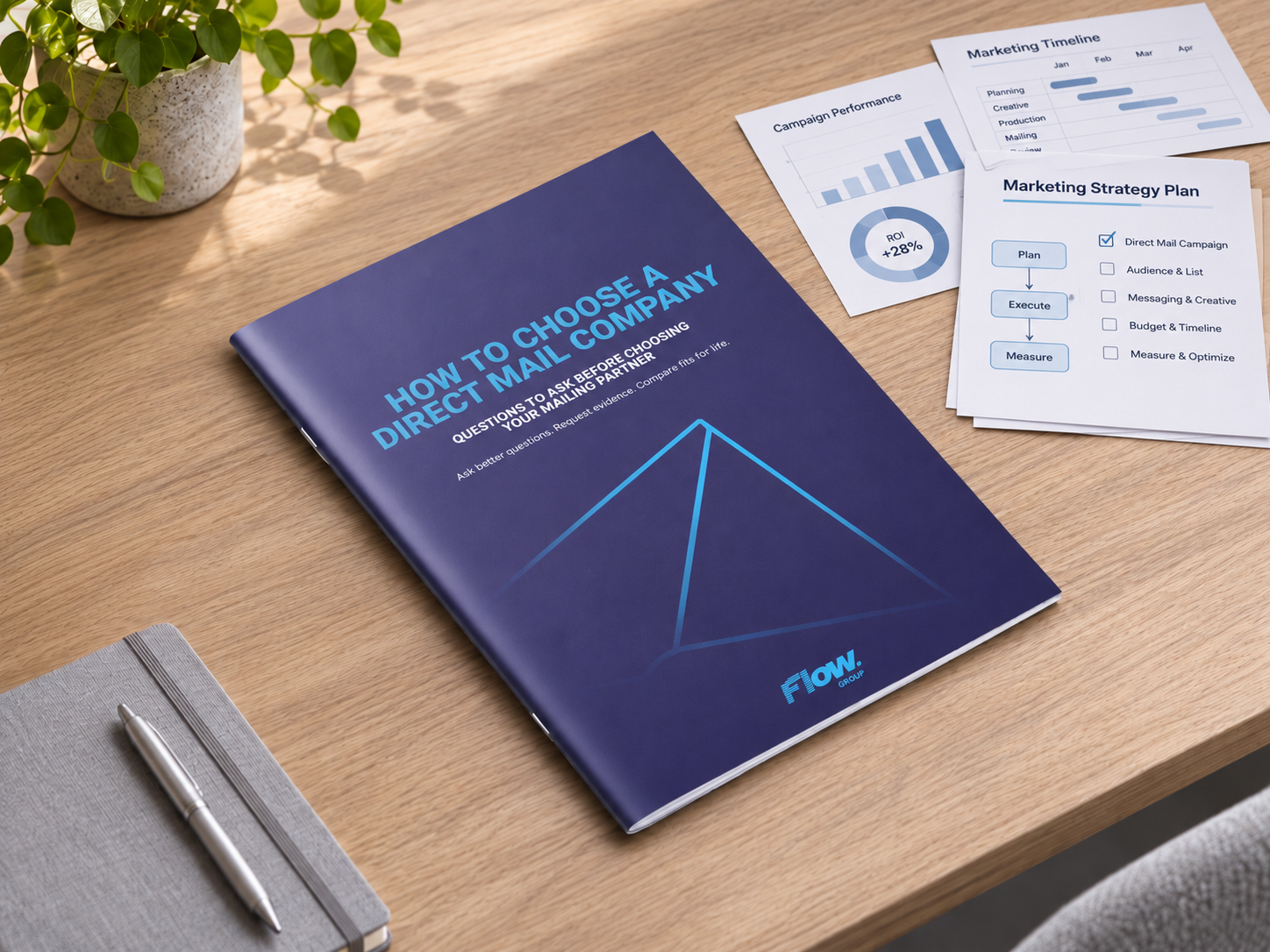
To help you assess potential providers, we have created a free checklist, How to choose a direct mail company: questions to ask. It covers the practical questions to raise before committing to a supplier, including data security, quality control, production capacity, delivery arrangements and reporting.
The value of reviewing a campaign extends beyond its immediate response rate. Production, fulfilment and postage arrangements can affect the overall cost and efficiency of a mailing programme, particularly when a business sends mail regularly.
Flow Group’s national estate agent case study describes how reviewing operational arrangements helped a client reduce costs. It is a useful example of why businesses should look at the wider process, not just the price of printing a single item.
The lesson is not that every campaign will achieve the same savings. Each business has different volumes, requirements and constraints. Instead, it is worth reviewing the whole workflow to understand where data preparation, print procurement, fulfilment and mailing arrangements could be made more efficient.
For businesses planning regular direct mail, this broader view can be just as important as the creative concept.
FAQ
Find answers to common direct mail questions, covering campaign planning, effectiveness for small businesses, UK consent requirements, performance measurement and choosing the right mailing partner.
Direct mail marketing: a practical guide for businesses
Direct mail marketing can help businesses reach targeted audiences, generate enquiries and build customer relationships. This practical guide explains how to plan a successful direct mail campaign, covering audience selection, data cleansing, creative, print, personalisation, fulfilment and performance measurement. Discover what to consider at every stage, how to avoid common mistakes and how to choose a direct mail company that fits your business needs. Includes a free supplier checklist to help you compare providers.

November 23, 2026
Read Insight
Royal Mail Christmas 2026: Last Posting Dates and Direct Mail Deadlines
Royal Mail have just announced the final postage dates for 2026. The cut-offs for access mail start to close on 15th December 2026. The first services to go are Royal Mail Bulk Mail Economy, Royal Mail Business Mail® (Sorted) Economy and Royal Mail Advertising Mail® Economy. That pretty much effectively ends access mail for the year.
November 17, 2026
Read Insight
Royal Mail shelves October price hike following OFCOM access dispute: what you need to know
This article details how a major pushback from mailing houses via the Mail Competition Forum (MCF) successfully forced Royal Mail to withdraw its controversial October price hike (Contract Change Notice 129).

October 15, 2026
Read Insight
Send us a message
Get in touch
Keep our details for later...

Phone Number
0800 090 3001
Email Address
info@theflowgroup.co.uk
What3words
jump.coast.teach
Working hours
Monday - Friday
Our Office
Unit J, Dyehouse Ln, Brighouse HD6 1LLFollow our social media